Monday – Thursday: 9.00 – 17.00*
Friday: 9.00 – 16.00*
NOT OPEN TO THE PUBLIC (OFFICE ONLY)
Friday: 9.00 – 16.00*
NOT OPEN TO THE PUBLIC (OFFICE ONLY)

The switch from a carrycot to a pushchair seat usually happens between 6 and 9 months, when your baby can sit up unaided, hold their head steady, and starts to resist lying down. Knowing when to switch from a carrycot to a pushchair comes down to your baby’s development, not their age. Carrycots are built for babies up to 9 kg (approx. 19,8 lb) under BS EN 1466:2023 – a weight most babies reach between 8 and 11 months. Once your baby reaches that weight, the carrycot is no longer suitable – readiness signs or not.
Your baby’s development decides the switch, not their age. Two are decisive: sitting up unaided with steady head control means your baby is ready to sit; hitting the 9 kg (approx. 19,8 lb) limit means the carrycot is no longer safe – even if your baby isn’t yet showing the other signs. If your baby reaches the 9 kg limit before showing the other signs, switch to a pushchair seat that reclines fully flat.
A carrycot feels like one of the safest places for a newborn – which is why some parents are reluctant to make the switch before 6 months, even when the need arises, and end up holding on longer than they should. Paradoxically, keeping a baby who actively pushes up in a carrycot can be less safe than switching to a pushchair. Carrycots aren’t tested for babies who try to push themselves up.
In the first 3 months, a baby’s neck muscles are still weak and their head needs full support at all times. Between 4 and 6 months, control steadily improves – most babies can hold their head up when propped in a supported sitting position, and need less and less help. By around 6 months, head control is usually stable enough for a baby to hold their head steady on their own.
Every baby follows their own timeline – the ranges above are averages, and a difference of weeks in either direction is normal.
For babies born prematurely, milestones are usually tracked from the corrected age (chronological age minus weeks premature), not the birth date.
In the UK, three standards apply to carrycots and pushchairs. The number on the label is the result of laboratory testing. Here’s what each one covers.
European standards (EN) are shared across the European standardisation system – the British Standards Institution (BSI) adopts them without modification as British Standards (BS EN).
The key difference between a pram and a pushchair is the module: a pram carries a newborn lying flat; a pushchair carries an older baby sitting up.
| Feature | Pram | Pushchair |
|---|---|---|
| Age guide | Birth to approx. 6 months | From approx. 6 months (lie-flat from birth on models that allow it) |
| Position | Flat, on the back | Sitting, semi-reclined or fully reclined |
| Weight limit | 9 kg / approx. 19,8 lb (BS EN 1466) | Up to 22 kg / approx. 48 lb (BS EN 1888-1 with 1888-2) |
| Field of view | Enclosed – sky and canopy | Open – the world around your baby |
| Sleep | Sleeping accommodation under BS EN 1466; follow manufacturer guidance | Fine for supervised naps, not a sleep space |
| Purpose | Flat, protected rest for a newborn | Taking an active part in the walk |
Two of these terms describe complete products on wheels, and the other two describe the modules that mount on the chassis. Here’s what each one actually means:
Buggy is another common term for a pushchair – typically a lighter, more compact model, often bought as a second, travel-friendly option rather than a first purchase.
You may also notice different terms in American listings: bassinet for carrycot, stroller for pushchair.
A carrycot certified to BS EN 1466 is designed as a sleeping accommodation – that’s how the standard defines it. A pushchair seat is not: it’s suitable for supervised naps on the go, but not as a sleep space. Even when a carrycot is certified to BS EN 1466, for longer sleep it’s recommended to move your baby to a dedicated cot or crib. Follow the manufacturer’s guidance for your specific model, and keep your baby in the same room as you.
No – a baby shouldn’t be in a semi-reclined position until they can hold their head steady and sit unaided. Even a semi-reclined position asks for head control and muscle tone that most babies don’t have until around 5 to 6 months. Before then, the only safe alternative to a carrycot is a pushchair seat set to the most reclined position (ideally lie-flat), on a model that the manufacturer states is suitable from birth.
A semi-reclined position can cause a baby to slump forward until their chin blocks their own airway. This is known as positional asphyxia – a documented cause of infant deaths in pushchairs and other sitting devices.
This position also puts load on an immature spine that horizontal lying does not. Paediatric physiotherapists advise that until a baby has good head and trunk control, time in any seat should be kept short.
Most babies turn to face forward between 6 and 12 months, once they can sit up unaided and are curious about their surroundings.
Curiosity about the world is a reason to turn the pushchair seat around – not a reason to move your baby out of the carrycot before they can sit unaided. A reversible seat pushchair gives you both options on the same chassis: parent-facing for the early months, forward-facing once your baby is ready to take in more of the world.
For newborns and the early months, parent-facing is the usual recommendation: it lets you make eye contact, talk to your baby and check on them without having to stop. A 2008 University of Dundee study, funded by the Sutton Trust, found that parents talked more than twice as much when the pushchair faced them. That early face-to-face contact, and the opportunity for babies to hear more speech, is thought to support language development.
There’s no fixed rule on when to turn the seat around. Most babies make the switch to a forward-facing pushchair between 6 and 12 months, once they can sit up unaided and are clearly interested in what’s ahead. Before then, parent-facing keeps the conversation going.
Switching doesn’t necessarily mean sitting your baby up right away. Once you swap the module, moving from a fully reclined position to sitting up can be a gradual process, matched to your baby’s development rather than the calendar. The tips below are indicative only – every baby is different, so you should consult a paediatric physiotherapist about the staged transition from carrycot to pushchair. They can assess your baby’s motor readiness and help you choose the right moment and position.
For the first few outings, a supportive insert or a headrest with side support helps. Remember that a seat unit heats up faster than a carrycot, which insulates from the ground, so keep an eye on your baby in warm weather.
If you’re ever unsure whether your baby is ready, your health visitor is the first person to ask, then your GP. Either can refer you to a paediatric physiotherapist if needed.
Many parents assume that switching from a carrycot to a pushchair means another expense. With a 3-in-1 travel system pram that problem doesn’t exist – the carrycot and the seat unit come as one set, mounting on the same chassis. The switch takes a few seconds and requires no additional purchases or tools. Additionally, if your set includes a pushchair that faces both ways – parent-facing for the early months, forward-facing later – there’s no extra purchase either way.
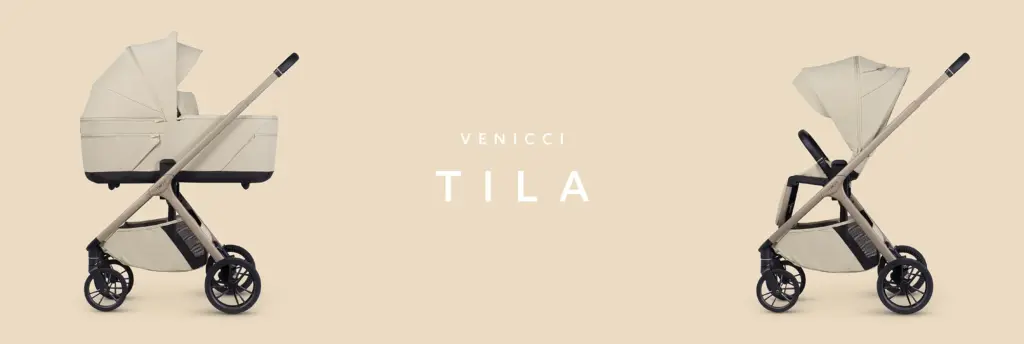
On the Venicci Upline 3 and Tila 3-in-1 travel systems, the carrycot is rated for babies up to 9 kg, and the reversible pushchair – suitable from birth in the fully reclined position – carries a child up to 22 kg. The change from lying down to sitting up is a swap of module, not a fresh purchase. The travel system is completed with a car seat. If you’re looking for a pram with a carrycot that grows with your child, the Venicci travel system stays with them from birth until around 4 years old.
When your baby sits up unaided, holds their head steady, and is approaching the 9 kg (approx. 19,8 lb) carrycot limit – for most babies, that’s between 6 and 9 months, but every baby develops at their own pace. Motor readiness decides the moment, not the date on the calendar.
Usually between 6 and 9 months, provided your baby can sit up unaided and hold their head steady. Some pushchair seats, such as all Venicci seat units, can be used in the fully reclined (lie-flat) position from birth until around 4 years old – covering the full 22 kg weight limit.
Stop using the carrycot when your baby reaches 9 kg (approx. 19,8 lb) – or sooner, if your baby starts sitting up unaided, pushing up on their hands or rolling in the carrycot. For most babies that’s between 6 and 9 months.
There is no age limit for a carrycot – the limit is weight: 9 kg (approx. 19,8 lb) under BS EN 1466:2023. Most babies reach that weight between 8 and 11 months.
9 kg (approx. 19,8 lb), set by BS EN 1466:2023. Once your baby hits that weight, the carrycot is no longer safe – regardless of their developmental stage.
Look for three signs: your baby sitting up unaided and holding their head steady, reaching the 9 kg (approx. 19,8 lb) weight limit, or pushing up on their hands and rolling in the carrycot. Any one of these alone may be your cue to switch.
Yes – if they can sit up unaided and hold their head steady. If they can’t yet, wait, or use a pushchair seat in the fully reclined (lie-flat) position on a model the manufacturer states is suitable from birth.
A pram is for newborns lying flat; a pushchair is for older babies sitting up.
For overnight sleeping, a dedicated cot or crib is always the safest choice – even when a carrycot is certified as sleeping accommodation under BS EN 1466.
A pramette is a single module designed to function as both a carrycot and a pushchair seat.
No – a carrycot is certified to BS EN 1466 as sleeping accommodation and typically designed to be carried by its handle. A lie-flat seat unit is tested to BS EN 1888 as a seat. Both keep your baby lying flat, but only the carrycot is certified as a sleep space.
Usually between 6 and 12 months, once they can sit up unaided, hold their head steady and are curious about the world.
Positional asphyxia is when an airway becomes blocked by the position of the body. In infants, this most commonly happens when the head slumps forward and the chin drops to the chest – a documented cause of infant deaths in pushchairs and other sitting devices.
BS EN 1466:2023 is the British safety standard for carrycots. It sets the safety requirements and test methods for products that provide a sleeping accommodation and are designed to carry a baby in a lying position. It applies to babies who cannot yet sit up unaided, roll over or push up on their hands and knees, up to a maximum weight of 9 kg (approx. 19,8 lb).
Just the module. The chassis stays the same from birth until around 4 years old (22 kg limit, BS EN 1888-2) – on models such as the Venicci Upline 3 and Venicci Tila. Only the upper module changes: carrycot → pushchair seat – and optionally a car seat.
This article is for general information and does not replace advice from your midwife, health visitor, GP or paediatric physiotherapist. Every baby develops at their own pace, and the age ranges here are a guide, not a rule.